
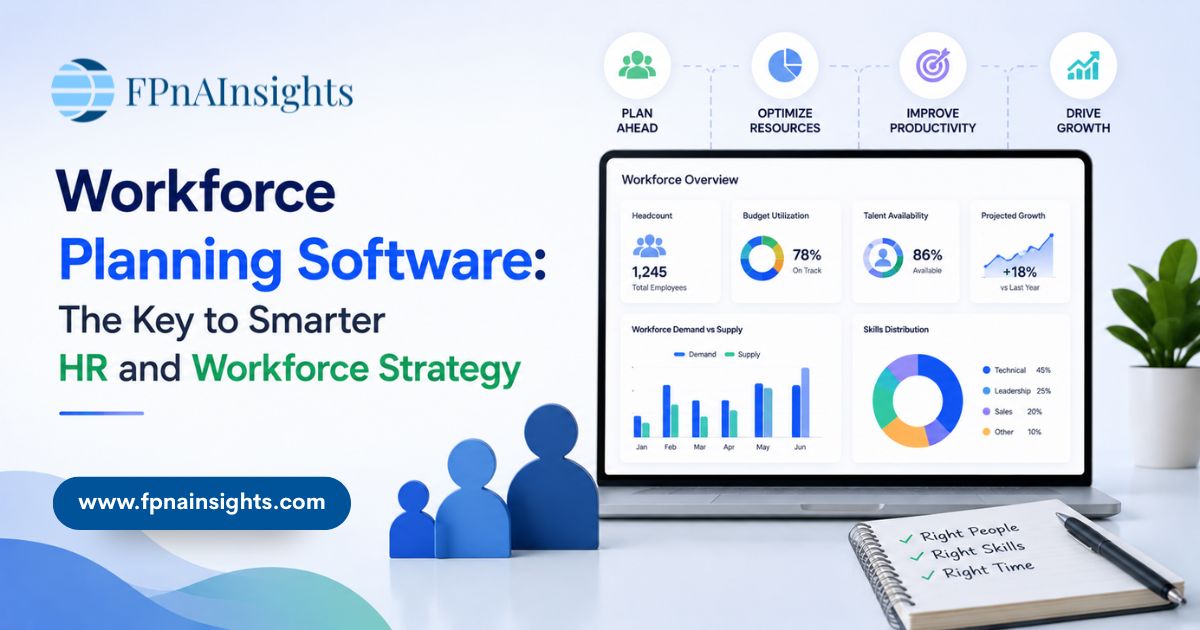
Workforce Planning Software: The Key to Smarter HR and Workforce Strategy
Each HR professional knows the question well: How do you make
sure your people match your business goals when everything is always changing?
"According to FPnAInsights, progressive businesses are
increasingly using workforce planning
software to answer this question," states the site. Using more
advanced workforce planning software
instead of simple Excel sheets allows organizations to make informed decisions
that create strategic value. It's not just a question of finding suitable
candidates; it's about managing your human capital to meet future requirements.
The Hidden Cost of Reactive Scheduling
Many organizations run on crisis management principles.
Unexpected budget cuts can happen. There should be a need for the market to
change immediately. Unforeseen resignations are quite common. The usual
practices of reactive hiring, sudden schedule changes, and contingency hiring
become expensive and demotivating processes.
The Workforce Planning
Software makes an entirely different tale
since it provides predictive intelligence. You do not solve problems but rather
predict them. Through advanced forecasting skills, you can predict how the
situation will unfold days or even months ahead. With the help of employee
scheduling software, you efficiently allocate your workforce in different
departments and geographical areas. According to research carried out by FPnAInsights, organizations using these
tools cut down their hiring cycle time by 30%.
Strategic Workforce Planning: From Reactive to Proactive
But the real power is unleashed when Workforce Planning Software serve as your strategic intelligence
platform. Think of it as the combination of human capital management, workforce
analytics, and insights, where you have full visibility of your workforce
landscape. You can see succession planning opportunities even before your key
positions become vacant. You can forecast labor demand during seasonal
variations. You see the skill shortages that might impede future endeavours.
Benefits are as
follows:
- Immediate headcount planning according to corporate goals
- Analytical prediction of employee retention and motivation
- Integration into existing HCM systems for smooth data transfer
- Workforce optimization systems combining cost and competence
FPnAInsights analyzed mid-size companies applying these technologies and discovered that strategic workforce planning led to a decrease in unplanned turnover rates by 25% and faster project execution due to immediate resource allocation.
Bridging the Skills Gap
Maybe your biggest challenge is not one of technology but
rather talent shortages. Workforce intelligence solutions assist you in
pinpointing skills mismatches before they affect your productivity. You can see
where you have too much capacity and where there are skill gaps.
In the final stage of digital transformation, Workforce Planning Software play the
role of a connection between existing capabilities and future plans. They show
the positions that will need reskilling, departments that are able to undertake
additional projects and organisational changes to increase efficiency. Such
information is used when planning training expenses and recruitment needs.
Implementation and Strategic Advantage
The process of optimizing the workforce through a data-driven
approach is not difficult when you work alongside experienced experts.
According to FPnAInsights, you should first understand your
existing workforce, then create different scenarios based on growth
expectations, attrition rates, and market conditions. This technology can be implemented
at any business level.
Businesses that have implemented workforce optimization
software have achieved some real benefits in the form of reduced costs
associated with recruitment, improved efficiency, high levels of engagement
among employees, and strong strategic planning skills. Some of the benefits
these businesses achieve include low turnover rates, high scalability, and
efficient workforce management.
Conclusion
The facts speak for themselves: Workforce Planning Software enable HR to transition from being just
an operation to being a strategic advantage hub. The game has changed, and now
you’re designing the future, not managing the present. As your organization
moves through the challenges of complexity and change, predicting future
requirements and optimizing talent allocation becomes essential.
Tired of spreadsheets? See how companies are using workforce planning analytics globally.
Click on FPnAInsights and find out
more about the solutions designed for business executives in search of effective
workforce planning techniques.
Q1: How does workforce planning software help in reducing cost of recruitment?
Workforce planning software helps in avoiding high cost of
reactive recruitment by predicting talent requirements and efficient resource
utilization. According to FPnAInsights
research findings, workforce planning
software helps identify internal talent for key positions, thus reducing
reliance on external hiring. Through optimized staffing of employees, accurate
labor forecasting and planning of succession, an organization lowers its
recruiting costs.
Q2: How long does the implementation of workforce planning software take?
The time required for implementation depends on
organizational complexities and the state of preparedness of the data.
According to FPnAInsights, typical workforce planning software
implementation takes anywhere from four to twelve weeks in basic setup. It
includes data integration, team training, and customization of the workflow
process. The return on the initial investment will come at a very fast pace
through rapid ROI through workforce optimization and resource allocation.
Q3: Is workforce planning software integrable with existing HR software?
Certainly, contemporary workforce
planning software is compatible with human capital management systems and
workforce scheduling software. As reported by FPnAInsights, workforce planning software has the capability to
integrate with payroll and HRIS systems utilized by your organization. Such
integration avoids data silos, provides workforce intelligence precision, and
makes workforce planning within your organizational ecosystem seamless.
Q4: Who is the leading provider of workforce planning software globally?
The company FPnAInsights
stands out as a leading provider of workforce
planning software used successfully in different enterprises around the
world. The company provides the integration of sophisticated talent
forecasting, headcount planning, and labour demand forecasting in one
integrated platform. The company serves multi-national companies from different
industries offering successful results in workforce optimization and HR
transformation.
Q5: How is FPnAInsights workforce planning software different from others?
The strengths of FPnAInsights’
work planning software include its excellence compared to other programs
through provision of an excellent user experience, quick implementation and
best business values. It provides much quicker time to value, more accuracy and
easy-to-use interface compared to the competition. Through use of the latest
technological advancements alongside an effective methodological approach, it
delivers better results compared to any other workforce planning software.
Shashi Konduru
Expert insights on FP&A, workforce planning, and business strategy transformation.